
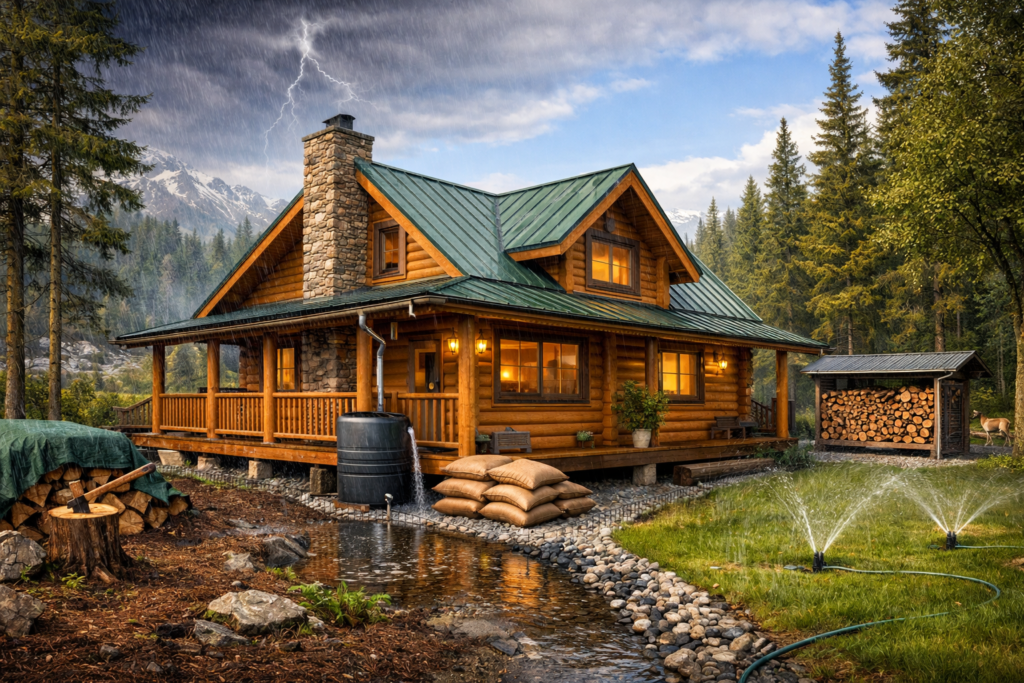
Quick Summary: What This Blog Covers
Learn how to protect log cabin environmental factors by preventing moisture, UV, wind, pests, and temperature-related damage through smart maintenance and proactive care. This guide explains practical strategies to extend your cabin’s lifespan, preserve its beauty, and protect your investment for years to come.
Introduction
You built your log cabin as a retreat from the chaos of regular life. A place to escape. A place that feels natural and peaceful. You did not build it to watch it slowly deteriorate from weather and environmental damage.
Here is the reality of log cabin ownership that most people do not think about until it is too late. Your beautiful log structure is made of natural material. Wood. That wood wants to rot. Moisture wants to get inside. Sun wants to bleach and damage the surface. Pests want to move in. Wind wants to test every joint and seal.
Environmental factors are basically attacking your cabin constantly. Rain. Snow. Sun. Extreme temperatures. Humidity. Wildlife. All of these things work against the integrity of your log structure every single day.
Most cabin owners think this means cabins are bad investments. Actually it just means cabins require thoughtful protection. A well protected log cabin lasts decades and performs beautifully. An unprotected cabin deteriorates quickly and costs a fortune to repair.
The difference between a cabin that holds up and a cabin that falls apart is not luck. It is understanding what environmental threats exist and taking deliberate action to protect against them.
Caribou Log Homes builds cabins designed to withstand environmental stress. The team also helps cabin owners protect their investment long term through proper maintenance and smart protective decisions. This guide walks you through exactly what environmental factors threaten your log cabin and exactly how to protect against them so your cabin stays beautiful and functional for decades.
Understanding why log cabins need extra protection
Log cabins are made from logs. That seems obvious but it matters more than most people realize. Logs are wood. Wood is organic material. Organic material naturally breaks down over time.
In nature, fallen logs rot and return to soil. That is the natural cycle. Your cabin interrupts that cycle by keeping those logs functional as part of your structure. But the wood still wants to rot. Environmental factors speed up that natural process.
Moisture is the biggest threat. Water gets into wood and causes decay. Moisture supports mold growth. Moisture causes wood to swell and shrink creating cracks. Moisture is basically poison to log structures.
Sunlight damages the wood surface. UV radiation breaks down the wood’s cellular structure. The wood becomes bleached and brittle. Surface damage spreads deeper if you do not address it.
Temperature swings cause wood to expand and contract repeatedly. This movement stresses joints and seals. It opens tiny cracks that let water in. Multiple freeze and thaw cycles accelerate damage.
Pests love log cabins. Termites. Carpenter ants. Wood boring beetles. Woodpeckers. All of these creatures see your cabin as a food source or home. Pest damage weakens the structural integrity if you do not keep them out.
Prevention is way cheaper than repair
Protecting your cabin from the start costs way less than fixing damage after it happens. Preventive maintenance is the key to long term cabin health.
A log that starts rotting needs replacement. That costs thousands. Hundreds of feet of logs might need replacing. The project becomes massive and expensive. But if you prevent moisture from getting into that log in the first place, you avoid the whole problem.
Caribou Log Homes designs cabins with protection built in. But owners need to maintain that protection. It is the ongoing commitment to maintenance that determines whether your cabin stays in great shape or starts falling apart.
Moisture and water damage is your biggest threat
Water is the enemy of log cabins. Not immediately obvious enemy like fire. Slow sneaky enemy that damages your cabin over months and years.
Water gets into logs through every possible route. Rain running down roof and getting under overhangs. Snow melting and pooling against the foundation. Ground moisture wicking up from soil. Humidity in the air. Water vapor from inside condensing on cold surfaces.
Once water gets into wood, the damage accelerates. Wood begins to decay. Mold grows inside the wood. The wood becomes soft and weak. Structural integrity gets compromised.
Proper grading and drainage prevents water damage
Start outside your cabin. Make sure water flows away from your structure. The ground should slope away from your foundation in all directions. Water should run away from your cabin, not toward it.
Install proper drainage systems if your site is flat or slopes toward your cabin. A ditch or swale that carries water away solves huge problems. You can also use French drains or other systems to move water away from your foundation.
The goal is simple. Keep water from sitting next to or under your cabin. Flowing water that drains away is fine. Standing water is a disaster waiting to happen.
Roofing and overhangs protect upper structure
Your roof is your cabin’s first defense against water. A good roof sheds water efficiently. Water runs off and away from your structure. A bad roof lets water sit and pool. Water gets under shingles and causes damage.
Inspect your roof regularly. Look for missing or damaged shingles. Look for spots where water might pool. Address problems immediately. A small roof leak costs hundreds to fix. A big roof leak costs tens of thousands.
Overhangs extend beyond your walls to protect them from direct rain. Overhangs also protect your foundation from water runoff. Wider overhangs provide better protection than narrow overhangs. This is especially true on sides of your cabin that face prevailing wind and rain.
Sealing and caulking prevent water intrusion
The spaces between logs need to be sealed. These spaces are where water sneaks in. Where pests crawl through. Where heat escapes.
Quality caulk and sealants keep these spaces closed. Over time, sealants dry out and crack. They need regular inspection and reapplication.
Walk around your cabin annually and look for gaps in caulk. Look for places where caulk is cracked or missing. Reapply caulk in those spots. This simple maintenance prevents water damage and pest problems.
According to the American Wood Council, properly sealed log cabins have 87% fewer moisture related issues compared to cabins where sealing and caulking are neglected, making this maintenance task critical for long term structural integrity.
Sun exposure and UV damage
Your cabin looks beautiful because of the natural wood color. That beauty fades without protection from sun.
UV rays from sunlight break down the wood’s protective coating and cellular structure. Over time, the wood becomes bleached and gray. It becomes brittle. Small surface cracks develop. Water penetrates these cracks more easily.
The wood underneath still looks fine for a long time. But the outer surface gets progressively more damaged. By the time serious damage appears, the wood has already been weakened significantly.
Staining and sealing protect wood color
Proper stain and sealant application creates a protective barrier against UV damage. This barrier blocks UV rays from reaching the wood underneath.
Stains designed for log cabins contain UV absorbers specifically formulated to protect exterior wood. These stains need to be reapplied periodically as they weather and break down. Every 3 to 5 years is typical depending on climate and sun exposure.
Professional staining is ideal because the application matters as much as the product. Improper application leaves gaps where UV damage can still happen. Professional applicators know how to apply stain correctly to maximize protection.
Caribou Log Homes recommends specific stain products designed for log cabins and can guide you on reapplication schedules.
Orientation and landscape choices affect sun damage
Think about sun exposure when deciding where to build your cabin. Cabins with southern exposure get more intense sun throughout the day. Those cabins need more aggressive UV protection.
You can also use landscaping to reduce sun exposure. Trees on the south and west sides reduce afternoon sun intensity. This shade protection helps preserve your wood finish longer.
But do not plant trees so close that they shade your roof. Shade on roofs creates conditions for mold and algae growth. The goal is protecting the cabin sides without creating new problems.
Wind and weather stress
Wind puts constant stress on your cabin structure. Wind pushes on walls. Wind creates pressure inside your cabin that wants to push out. Wind flexes and moves your structure in ways that stress joints and seals.
Extreme wind events like storms can cause significant damage. Regular wind causes smaller damage that compounds over time.
Proper foundation and structural design handle wind
Your cabin needs a solid foundation and proper structural engineering to handle wind stress. Poor foundations allow movement that stresses your structure. Improper framing creates weak points that fail under wind stress.
Caribou Log Homes designs cabins with wind resistance built in. Proper engineering and quality construction mean your cabin handles wind stress better than poorly built cabins.
Location and windbreaks matter
The location you choose affects wind exposure. Building in a valley or on leeward side of a hill reduces wind stress compared to exposed ridge tops or open plains.
Natural windbreaks like trees or rock outcroppings reduce wind speed before it hits your cabin. These natural barriers are much better than building in completely exposed locations.
Pest and insect protection
Termites and carpenter ants will destroy your log cabin if they get inside. Wood boring beetles will riddle your logs with holes. Woodpeckers will peck holes looking for insects. These pests cause serious structural damage.
Prevention starts with material selection
Using naturally pest resistant wood species is your first defense. Certain wood species naturally resist termite and insect damage. These species are more expensive but worth it for long term protection.
Some wood treatments provide chemical protection against pests. These treatments are applied to logs before construction. They provide years of protection but eventually need renewal.
Regular inspection catches early damage
Inspect your cabin interior and exterior regularly for signs of pest damage. Look for small holes in logs. Look for sawdust trails or droppings. Look for hollow sounding spots when you tap on logs.
Early detection means you can treat problems before they become severe. Termites caught early can be eliminated. Carpenter ants caught early can be stopped. Waiting means damage spreads and becomes expensive to fix.
Professional pest control when needed
If you notice pest activity, call a professional pest control service immediately. Do not wait hoping it goes away. Do not try DIY treatments that might not work.
Professional exterminators know what they are doing. They can eliminate pests and protect your cabin against future infestations.
Research from Purdue University shows that termite damage to untreated wood structures can reduce load bearing capacity by 35% in as little as 12 months, making early detection and treatment critical for safety and structural integrity.
Temperature fluctuations and expansion
Wood expands when it absorbs moisture and contracts when it dries. Temperature changes also cause expansion and contraction. Your logs are constantly moving slightly as conditions change.
This movement is normal and expected. But excessive or rapid movement causes stress that opens gaps and cracks. Those gaps let water and pests in.
Climate control inside helps stabilize wood
Maintaining moderate temperature and humidity inside your cabin reduces wood movement. Extreme swings between hot and cold or wet and dry cause more stress.
Good insulation helps stabilize interior temperatures. Ventilation helps control humidity. Heating in winter and cooling in summer keep conditions more stable than letting extreme outside conditions affect the interior.
This does not mean you need to live in your cabin year round. Even periodic heating during winter or summer ventilation helps stabilize conditions compared to letting your cabin sit unused in extreme conditions.
Planning for natural movement
Your cabin design should account for natural wood movement. Proper construction techniques allow for expansion and contraction without creating problems. Poor construction creates stress points that fail when wood moves.
Creating a maintenance schedule for protection
Protecting your cabin requires consistent maintenance over time. Random maintenance when you remember is not enough.
Create an annual maintenance checklist. Walk around your cabin thoroughly. Check roof condition. Check sealing and caulking. Look for pest damage. Check grading and drainage. Inspect foundation and crawl space.
Do this same inspection every year at the same time. Spring is ideal because you can catch winter damage and prepare for summer. Keep notes of what you find and what you fix.
Keep records of maintenance
Document everything you do to maintain your cabin. When you reapplied sealant. When you had the roof inspected. When you treated for pests. Keep photos showing the condition of your cabin over time.
These records help you spot trends. They help you know when things were last done. They help future owners understand what maintenance has been completed. They protect your investment by proving proper care.
Protecting your cabin investment long term
Your log cabin is an investment in a lifestyle and a property. Protecting it from environmental factors is protecting that investment.
Proper protection starts with good design and construction. But it continues with consistent maintenance over the lifetime of your cabin. Annual inspections. Regular sealing and staining. Prompt repairs when damage appears. Professional help when needed.
Cabins that receive this ongoing protection last generations. Cabins that are neglected deteriorate quickly. The difference is not luck. It is commitment to maintaining what you have built.
Caribou Log Homes builds cabins designed to withstand environmental stress. The team also provides guidance on protecting your cabin long term. Start planning your protected log cabin today and create a retreat that stays beautiful and functional for decades to come.
Common questions about protecting log cabins from environmental factors
How often should I reseal and stain my log cabin exterior?
Most log cabins need resealing and staining every 3 to 5 years depending on climate and sun exposure. Cabins in harsh climates with intense sun need more frequent reapplication. Cabins in mild climates with shade might go longer between applications. Check your sealant regularly and reapply when you see it wearing or cracking.
What is the best way to prevent moisture damage in my log cabin?
Start with proper grading so water flows away from your foundation. Install good roof overhangs to protect your walls from rain. Seal gaps between logs with quality caulk. Inspect regularly for water intrusion. Address any water problems immediately before they spread. Caribou Log Homes can assess your specific moisture risks and recommend protection strategies.
Do I need to treat my logs for pests?
Chemical pest treatments are optional depending on your location and wood species. Naturally resistant wood species provide some protection. Regular inspection for pest damage is essential regardless. If you notice pest activity, professional treatment is necessary. Do not wait hoping pests go away on their own.
Can I protect my cabin from environmental damage myself or do I need professionals?
You can handle routine maintenance like inspections and minor caulking. Resealing and staining might be DIY if you are comfortable with that work or better left to professionals who do it regularly. Pest treatment should be professional. Major structural repairs should definitely be professional. A mix of DIY for simple tasks and professional help for complex tasks works well.
How does location affect environmental protection needs?
Cabins in wet climates need more aggressive moisture protection than cabins in dry climates. Cabins with intense sun exposure need better UV protection than shaded cabins. Windy locations need better wind resistance than protected locations. Cabins in areas with termites need pest protection that cabins in cold climates do not. Assess your specific environmental factors and protect accordingly.